
Seller Guide Sep 16, 2026
So you're ready to buy a car in Guatemala. Maybe it's your first vehicle, or maybe you're upgrading. Either way — this is not the kind of purchase you want to rush.
Guatemala has one of the most paperwork-heavy vehicle transfer processes in Central America. Miss one document or skip one step at SAT (Superintendencia de Administración Tributaria), and your entire transaction can be delayed by days or even weeks. Buyers have been turned away from the SAT office for forgetting to photocopy the cover of their passport — not just the pages inside, the actual cover.
This guide is built specifically for buyers in Guatemala. Whether you're buying locally from a private seller or browsing listings on platforms like CarAgencia, this walkthrough covers everything: the documents you need, the exact steps to follow, the safety checks that could save you thousands, and the red flags no seller will ever mention.
Read this before you hand over a single quetzal.
Why Buying a Used Car in Guatemala Requires Extra Attention
Guatemala's private car market is large and active. You'll find everything from beat-up city commuters to clean Toyota Hiluxes and well-maintained Honda CRVs. The demand is real, the supply is real — but so are the risks.
Here's why buyers specifically need to be careful:
The SAT transfer process is bureaucratic and strict. Small paperwork errors delay the whole transfer.
Police checkpoints are routine, especially around the 15th and last day of each month. Officers check your license, registration card (tarjeta de circulación), and tax card. If ownership hasn't been properly transferred, you could face trouble even if you've already paid for the car.
Road conditions vary wildly — from paved highways to cobblestone streets to unpaved dirt roads. Mechanical condition matters more than in other markets.
Fraud and misrepresented vehicles exist. Without a proper inspection, you may be buying someone else's problem.
Documents You Need as a Buyer
Getting the paperwork right is the single most important thing you can do. Here's a breakdown of what's needed for a standard used car purchase in Guatemala.
Documents the BUYER Must Have
Document | Details |
DPI (Documento Personal de Identificación) | Original required. Guatemalan nationals only. |
Passport | For foreign buyers — bring originals AND photocopies of every page, including the cover. |
NIT (Número de Identificación Tributaria) | Required for all SAT transactions. Guatemalan citizens: since March 2025, your DPI number works as your NIT. Foreign buyers must visit a SAT office in person with a valid passport to obtain one. |
Proof of Guatemalan address | Sometimes required for foreign buyers registering a vehicle. |
Documents the SELLER Must Provide
Document | Purpose |
Certificado de Propiedad (Property Certificate) | Proves the seller is the legal owner. Check the name matches their DPI exactly. |
Tarjeta de Circulación (Circulation Card) | The vehicle's registration document. Verify it's current and matches the car's VIN. |
Calcomanía de Circulación (Circulation Sticker) | Annual sticker showing the vehicle has met circulation requirements. |
Factura Electrónica (FEL Invoice) | Since June 2023, all sales must use Guatemala's electronic invoicing (FEL) system. A paper receipt is no longer legally valid. |
Bill of Sale (Contrato de Compraventa) | A written agreement signed by both parties stating the agreed sale price. |
Pro tip: Always verify the VIN on the physical car matches every document. Check the chassis, the dashboard plate, and the documents. A mismatch is a major red flag.

The Step-by-Step Transfer Process at SAT
Once you've agreed on a price and collected the documents, here's how the official ownership transfer (traspaso) works.
Step 1 — Hire a Tramitador (Paperwork Helper)
Most buyers in Guatemala hire a tramitador — a local paperwork specialist who knows the SAT system inside out. This is strongly recommended for first-time buyers and absolutely essential for foreign buyers who don't speak Spanish fluently.
A tramitador handles the queue, double-checks your documents, fills in forms correctly, and navigates any unexpected issues.
Step 2 — Prepare Your Complete Document Pack
Before visiting SAT, confirm you have:
Original DPI / passport (with full photocopies, including the cover page)
Your NIT (or confirm your DPI works as your NIT)
Seller's original Certificado de Propiedad
Seller's original DPI
Signed Contrato de Compraventa (bill of sale)
Tarjeta de Circulación
Both buyer and seller must either appear at SAT together, or one can authorize a representative through a notarized poder especial (power of attorney).
Step 3 — Pay the Transfer Fee
The cost of a vehicle ownership transfer in Guatemala is:
Q120 base fee + 12% IVA (VAT) on the declared sale price
For example: If you declare the sale price as Q80,000, you'll pay Q120 + Q9,600 IVA = Q9,720 in total transfer costs.
Payment is made through the Declaraguate portal and can be paid at major banks including Banrural, BI, BAM, and BG. For amounts over Q38,000 (~$5,000 USD), notify your bank in advance to unlock daily transaction limits.
Step 4 — Complete the Transfer Within 30 Business Days
Once the seller endorses the Certificado de Propiedad over to you, the transfer must be completed within 30 business days. Don't sit on this.
Step 5 — Obtain Your New Tarjeta de Circulación
After the transfer is processed, you'll receive your updated circulation card in your name. This is what police checkpoints will check — make sure you have it before driving the vehicle regularly.
Vehicle Safety Inspection — What to Check Before You Buy
Guatemala's terrain is tough. Between city congestion in Guatemala City, cobblestone streets in Antigua, and unpaved roads everywhere else, vehicles take a beating. A safety check before purchase isn't optional — it's your protection.
Pre-Purchase Inspection Checklist
Exterior
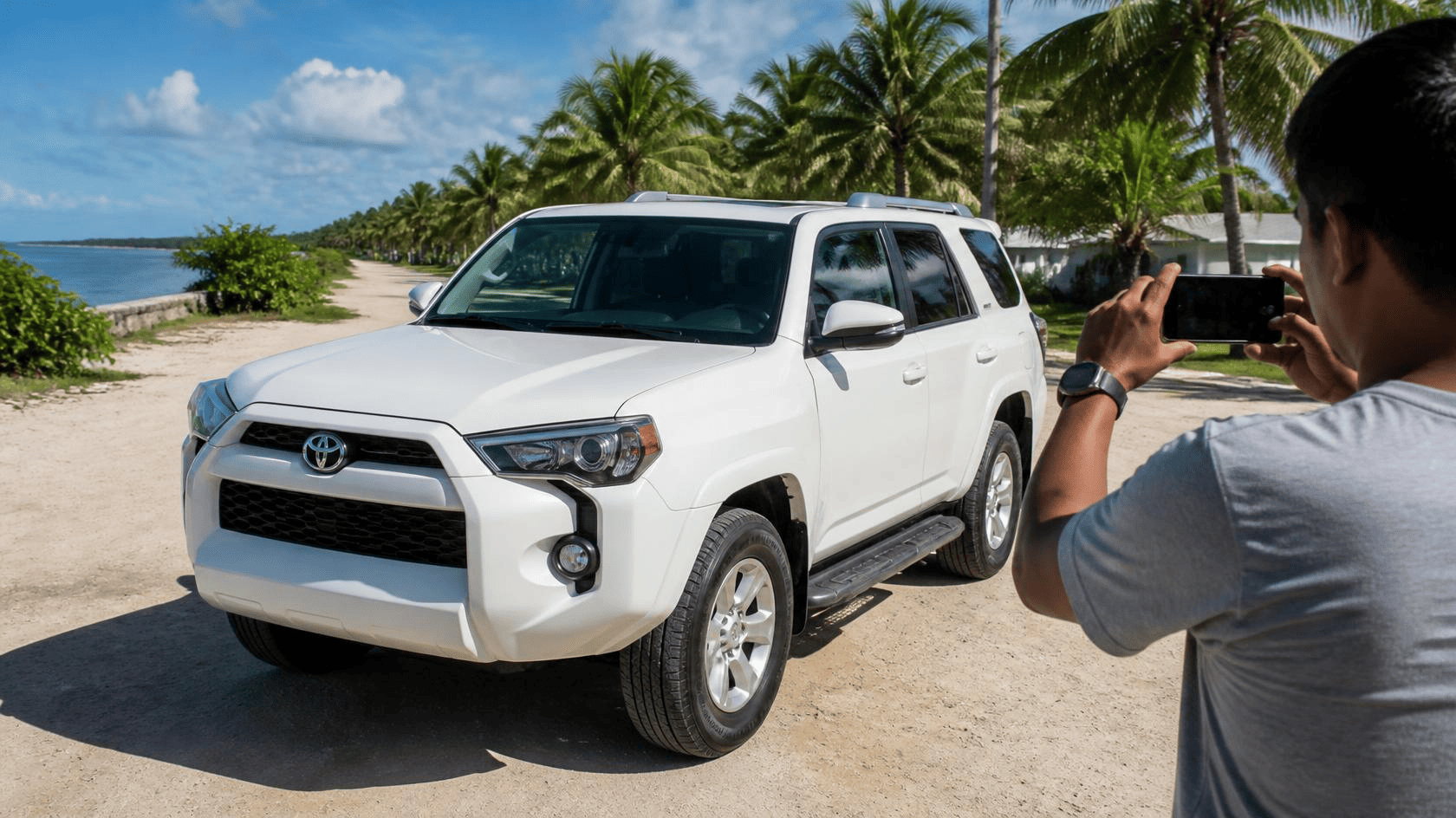
Walk around the full car. Look for uneven panel gaps — they signal past accident repairs.
Check paint consistency. Run your hand across panels. Overspray or bumpy texture = repainted after damage.
Inspect for rust, especially under the wheel arches, along the rocker panels, and under the doors.
Look under the car for fluid stains on the ground.
Under the Hood
Check engine oil: should be clean, not dark or gritty.
Transmission fluid: should be pink or red, not brown or burning-smelling.
Coolant level and color: mixed coolant types can signal rushed repairs.
Power steering and brake fluid: low levels may indicate leaks.
Interior
Check for musty smells or water staining under carpets — signs of flood damage.
Test all electronics: windows, AC, dashboard lights, horn, wipers.
Inspect the seatbelts. Pull hard — they should lock under sudden tension.
Test Drive
Drive on city roads and, if possible, an unpaved section. Guatemala's terrain reveals problems quickly.
Listen for knocking, grinding, or vibration at speed.
Test the brakes hard in a safe space. Any pulling, grinding, or long stopping distance is a warning.
Turn the steering wheel fully left and right at low speed. Clicking sounds = CV joint wear.
Non-Negotiable Deal Breakers
Frame rust or bent chassis
Flood damage (check floor carpets, seat rails, and wiring under the dashboard)
Mismatched VINs across documents and the vehicle
A seller who won't allow an independent mechanic inspection
Recommendation: Pay a trusted local mechanic Q200–Q500 to inspect the vehicle before purchase. It's one of the best investments you can make.

The Expertaje — Guatemala's Official Vehicle Technical Inspection
Before a used car can legally change ownership in Guatemala, it must pass an expertaje — a technical evaluation conducted by specialists from the Policía Nacional Civil (PNC) at authorized national centers.
This evaluation checks:
Safety systems (brakes, lights, seatbelts, steering)
Structural integrity
Emissions compliance (in applicable regions)
VIN and chassis verification against official records
The seller is typically responsible for arranging the expertaje before the sale. If a seller tells you the expertaje isn't needed — that's a red flag. Insist on it.
After import or vehicle category changes, a new expertaje is also mandatory to receive the circulation sticker (calcomanía de circulación) required to legally drive in Guatemala.
Costs Summary — What a Used Car Purchase Actually Costs in Guatemala
Beyond the car's price, buyers should budget for these additional costs:
Cost Item | Estimated Amount |
SAT Transfer Base Fee | Q120 |
IVA on Sale Price (12%) | Varies (e.g., Q9,600 on Q80,000 car) |
Tramitador Fee | Q500–Q2,000 depending on complexity |
Expertaje (Technical Inspection) | Q150–Q400 |
Pre-Purchase Mechanic Inspection | Q200–Q500 |
Annual Liability Insurance (SOAT) | Q200–Q500/year estimated |
New Circulation Sticker (Calcomanía) | Varies by vehicle value and year |
Plan to add 15–20% on top of the car's asking price to cover all transfer and compliance costs.

Red Flags That Should Make You Walk Away
These are the warning signs that experienced Guatemalan car buyers know to watch for:
Seller is rushing you. Legitimate sellers don't pressure timelines.
The price is suspiciously low. Under-market prices almost always mean hidden problems.
Documents are incomplete or "at the notary." All original documents should be available at the time of inspection, not later.
The VIN on the car doesn't match the documents. This could mean a stolen vehicle or document fraud.
No expertaje has been done. Required by law for transfer.
Seller refuses an independent mechanic inspection. Non-negotiable. Walk away.
Cash only, no FEL invoice. Paper receipts are not legally valid since June 2023. A seller who won't issue an electronic invoice (FEL) is operating outside legal requirements.
Private seller has multiple cars "for sale." Could indicate a curbstoner operating an unlicensed dealership.
Where to Find Cars for Sale in Guatemala
One of the easiest ways to browse verified listings in Guatemala is through CarAgencia at caragencia.com/cars-for-sale/Guatemala. The platform connects buyers with sellers across the country, making it easier to compare options, check pricing, and find vehicles that meet your needs — before you even visit in person.
Always cross-reference any listing's asking price against similar vehicles, factor in your transfer costs, and never skip the pre-purchase inspection regardless of how clean a listing looks online.
FAQs — For People Buying a Car in Guatemala
Q1. Do I need to be a Guatemalan citizen to buy a car in Guatemala?
No. You do not need residency or citizenship to purchase and register a vehicle in Guatemala. All you need is your passport and a Guatemalan NIT (tax ID number), which you can obtain in person at any SAT office with a valid passport and proof of a Guatemalan fiscal address.
Q2. Can the seller and I complete the transfer online, or do we both have to go to SAT?
Both parties can complete the transfer either by appearing together at a SAT office, or by having active SAT Virtual Agency accounts for the digital option. If one party cannot be present, they can authorize a representative through a notarized poder especial (power of attorney), including at a Guatemalan consulate abroad.
Q3. What happens if I drive the car before the transfer is complete?
Police checkpoints in Guatemala are common, especially mid-month and at month-end. Officers verify your license, circulation card, and tax card. If the vehicle is still registered to the previous owner, you could face fines or complications even if you paid for the car. Complete the transfer before regular use.
Q4. What is the expertaje and why does it matter as a buyer?
The expertaje is a mandatory technical inspection conducted by PNC-certified specialists. For used car sales, the vehicle must pass this evaluation — which checks safety systems, emissions, structural integrity, and VIN verification — before ownership can transfer. If a seller skips this step or can't provide proof it was done, treat it as a serious warning sign.
Q5. Is it safe to buy from a private seller vs. a dealership in Guatemala?
Both options are viable, but they come with different risk profiles. Dealerships often handle the expertaje and paperwork on your behalf and may offer limited warranties. Private sellers can offer better prices, but you take on full responsibility for document verification, inspection, and the transfer process. Whichever route you choose, never skip the pre-purchase inspection and always insist on a valid FEL electronic invoice.